

Women’s Health -
Osteopathy for every stage
of a woman’s life
Compassionate care that takes your whole body — and your whole experience — seriously.
Women’s bodies are remarkable. Throughout a lifetime they navigate profound physical transformations — from adolescence and the menstrual cycle, through pregnancy and the postpartum period, to perimenopause and beyond. Each stage brings its own demands, its own challenges, and its own need for support.
And yet, conditions that affect millions of women — endometriosis, adenomyosis, PCOS, menopause and autoimmune disorders — remain underfunded, poorly understood, and too often dismissed. Many women spend years being told their symptoms are normal, or being treated for one isolated problem without anyone looking at the bigger picture.
I know this experience first hand. As a woman myself, I have navigated my own women’s health challenges — and felt the frustration of a system that too often treats symptoms in isolation, without considering the effect on the body and the person as a whole. It’s why women’s health matters so much to me, and why I want every woman I see to feel heard, understood and properly cared for.
What I can help with
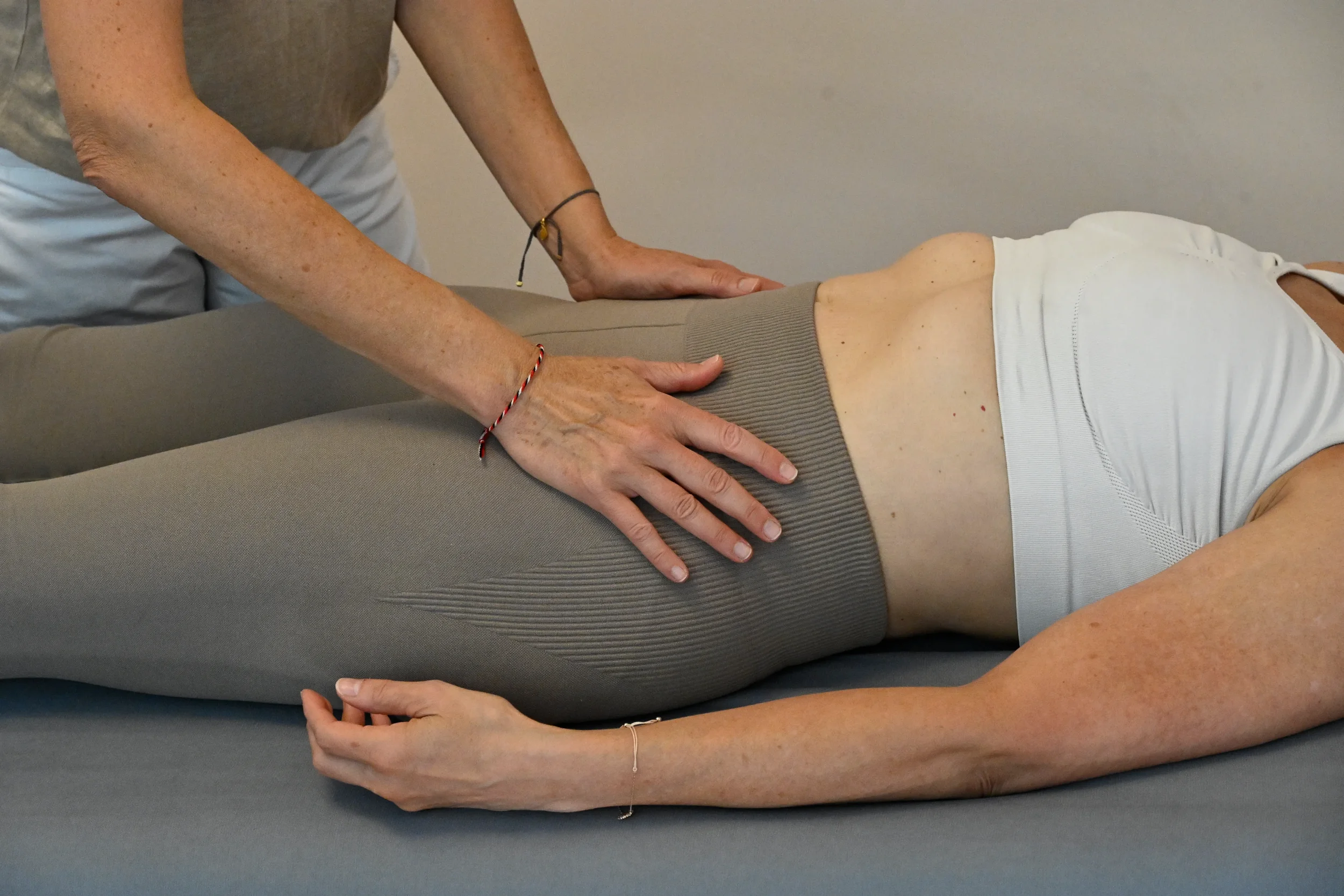
Using osteopathy, I work with women across a wide range of conditions, including:
Pelvic HealthPelvic pain and dysfunction
Chronic pelvic pain can feel diffuse and difficult to pin down — and is too often dismissed as something to simply live with. It frequently has a structural root: tension in the pelvic floor muscles, restrictions in the pelvis, Sacroiliac joints and tailbone, pressure on nearby nerves, or congestion from too much pressure building up within the pelvis. Osteopathic treatment works to identify and release those restrictions, easing daily discomfort.
Incontinence and Prolapse
Bladder leakage, urgency, and mild prolapse are far more common than women realise—and far more treatable than many are told.
These conditions are deeply shaped by how pressure moves through the body, which is exactly where osteopathy comes in. By restoring the vital structural relationship between your diaphragm and pelvic floor, your body becomes much better equipped to manage everyday physical pressure from coughing, laughing, or lifting.
At the same time, ensuring optimal blood flow and nerve conduction to the pelvis provides a much stronger foundation for any pelvic floor exercises you might be doing, helping your body heal and adapt more effectively.
Sexual Pain and Health (e.g. painful intercourse)
Pain or discomfort during intimacy — including dyspareunia (painful intercourse), vaginismus, and vaginal pain — can have multiple contributing factors: pelvic floor tension, scar tissue, hormonal changes, endometriosis, previous childbirth, or heightened sensitivity in the surrounding tissues and nerves. Osteopathy assesses and addresses restrictions and tension in the pelvis, pelvic floor, abdomen, hips, and lower back through gentle external techniques — and, where appropriate and with your consent, internal vaginal techniques. The aim is to reduce pain, support a more comfortable, functional pelvic environment and help restore comfort and confidence during intimacy.
Endometriosis Support
Osteopathy doesn't treat endometriosis itself — but it can meaningfully reduce the physical burden it places on the body. The persistent tension, abdominal guarding, and restricted organ mobility that build up around endometrial tissue are things osteopathy addresses well. Treatment aims to reduce pain, restore freer movement between structures, and ease pelvic congestion and bloating — supporting better blood flow and lymphatic drainage in the pelvis in a way that can actively help reduce local inflammation.
PMOS -Polyendocrine Metabolic Ovary Syndrome (formerly known as PCOS - Polycystic Ovary Syndrome)
Osteopathy does not directly cure or treat PMOS but it can serve as a helpful complementary therapy to manage pain and support overall well-being with techniques that target the abdomen and pelvis to reduce tissue restriction, ease pelvic floor tightness, and improve local blood flow
Menstrual Comfort
Severe period cramps and cycle-related back pain are not simply a fact of life, even when they have been present for years. Restricted mobility in the lower spine and pelvis, reduced circulation in the pelvic area, and tension in surrounding ligaments all amplify how the body experiences the menstrual cycle. Osteopathic treatment works to ease those restrictions — not to change the cycle, but to reduce the load it places on the body.
Prenatal care and pregnancy-related pain (back, pelvis, hips, ribs)
Pregnancy places significant and rapidly changing demands on the whole body — the pelvis, spine, hips, and ribcage all adapt continuously as the baby grows. Osteopathy helps the body move through those changes more comfortably, addressing pelvic girdle pain, sciatica, shortness of breath, and the general tension that builds across the trimesters.
Symphysis pubis dysfunction (SPD)
Osteopathy helps relieve Symphysis Pubis Dysfunction (SPD) by gently realigning the pelvis and hips to reduce painful friction and strain on the pubic symphysis joint.
Postpartum recovery and return to movement
After birth, Osteopathy can support recovery from whatever the birth involved — including C-section or perineal scars, diastasis recti, and the postural strain of nursing and carrying a newborn.
Diastasis recti (abdominal separation)
Osteopathy helps heal diastasis recti by releasing tension in the thoracolumbar fascia to reduce abdominal strain while promoting correct pelvic floor engagement. By restoring full-body alignment and retraining the deep core, this holistic approach balances intra-abdominal pressure to safely rebuild stability from the inside out.
Postnatal pelvic floor rehabilitation
Surgical Scars (C-section, Episiotomy, Mastectomy, Laporoscopy, etc)
Surgical scars—from C-sections, laparoscopies, or other abdominopelvic procedures—can create deep fascial adhesions that pull on surrounding tissues, sometimes years after your operation. Specialized ScarWork gently mobilizes and restores elasticity to the affected area, reducing restrictions and improving tissue glide so it stops tugging on nearby structures. Left unaddressed, these deep adhesions can become the hidden root cause behind unexplained bladder urgency, localized nerve pain, or strange pulling sensations both around the scar and in seemingly unrelated areas of the body.
Rib and thoracic pain during or after pregnancy
Breastfeeding-related tension and discomfort
Post-mastectomy scar tissue and restricted movement
My approach
Every treatment begins with listening. Your history, your symptoms, and your experience — all of it matters, and all of it informs how I work with you.
I use a wide range of gentle, hands-on techniques tailored to your specific needs, including visceral manipulation, neural manipulation, craniosacral therapy, fascial release and ScarWork. Where clinically appropriate, I also offer internal treatment techniques — always with full explanation, consent and sensitivity. This includes internal pelvic floor assessment to establish an accurate picture of your pelvic floor function — its strength, coordination, and tension patterns — from which I develop a personalised rehabilitation plan tailored to your individual needs.
My goal is not just to relieve your symptoms, but to understand what is driving them — and to give you the tools, knowledge and support to feel at home in your body again.
A personal
note
Women’s bodies deserve care that is as complex, layered and individual as they are. I am drawn to this field because I believe that too many women have been told their pain is normal, their symptoms are manageable, or that nothing more can be done.
The numbers are striking. An estimated 1 in 10 women has endometriosis — yet the average time from first symptoms to diagnosis is 4 to 12 years. In a large national survey, 84% of women reported feeling unheard by healthcare professionals at least some of the time. Research consistently shows that the majority of women with pelvic floor or urinary symptoms never seek help — not because the problem isn’t real, but because embarrassment, normalisation, or a previous dismissive response got in the way.
This is not acceptable. And it is not your fault.
As an osteopath, I want to be part of changing that — through direct, compassionate, whole-body care. My goal is to validate your physical experience, empower you with personalised knowledge, and ensure you never have to navigate your health feeling dismissed or unsupported. I don’t accept that nothing more can be done. And neither should you.
My training in
women’s health
- Women's Health - Osteopathic Care in Gynaecology — Prof. Renzo Molinari, D.O. (UK)
- Women’s Health — Michael Pye, D.O., NZ
- Pelvic Health: Introduction to Pelvic Health Internals — Dr Melissa Davidson, NZ
- Visceral Manipulation 3: Pelvis — Barral Institute
- Advanced Visceral Manipulation: Trauma — Barral Institute
- ScarWork (Sharon Wheeler Method) — Karin Wiesner, Physiotherapist
- Supported from the Start: Osteopathy for Pregnancy, Birth, and the Postpartum Period — Claudia Knox, DO, MSc Paeds Ost, BSc Ost
- LIFE OF A WOMAN – Osteopathic Support from Childhood to Menopause — Anja Engel-Schulmeyer, MSc D.O. DPO and Stefanie Maierhofer, MSc. D.O.
A note for
referrers
If you are a midwife, GP, pelvic health physiotherapist or other practitioner looking to refer patients, I welcome the conversation. I am happy to discuss individual cases, answer questions about my approach, and ensure a joined-up experience for your patients. Please feel free to get in touch directly.
“I cannot recommend Brita highly enough. During and after my pregnancy, she was absolutely amazing and helped keep me comfortable, mobile, and upright through some really challenging pelvic girdle pain. Brita has such a calm, caring nature and always made me feel supported and listened to. Her treatments made a huge difference to my pain and overall wellbeing, and I’m so grateful for all of her help throughout my pregnancy journey. I would wholeheartedly recommend her to anyone looking for a compassionate and highly skilled osteopath.”
Ready to take
the first step?
Whether you’ve been dealing with something for years or are just starting to seek answers, I’d love to hear from you. You deserve care that sees the whole picture.